Find the gap with AI. Prove it with the market.
GapSonar ranks buildable software ideas with AI, then validates the winners with real market demand — before you write a line of code.
No credit card · Free to start · Built for solo devs
The real bottleneck
You can build. You just don't know what.
Most indie devs don't fail because they can't ship. They fail before the first commit — on the idea.
Blank-page paralysis
You open a new file and… nothing. No idea worth a weekend, let alone a launch.
Chasing ghosts
You grab the first shiny idea and run — without ever checking if a single person wants it.
Launching to silence
Weeks of building, one Show HN, and… crickets. The validation came too late.
AI builders like Lovable, Bolt and v0 nailed how to build. Nobody solved what to build. We did.
An analytics engine,
not a chatbot with confidence.
Four independent data layers feed every gap. If a claim can't be traced to one of them, it doesn't ship.
Real people, complaining
Reddit and Hacker News discussions, typed into signals. The gold standard is the costly workaround: "I built a spreadsheet for this." Every one keeps its permalink.
Licensed search data
Monthly volume, difficulty, CPC and 12-month trend for every keyword a gap touches. Not scraped, not guessed by a model, not last year's CSV.
Competition, page by page
We classify what actually ranks: working tool, blog post, forum thread, abandoned product. Three tools in the top 3 is a wall. Three forum threads is a door.
3,500+ business categories
A curated taxonomy of real-world verticals shows how dense a market is, which makes directory and local plays measurable instead of hopeful.
The order matters. The AI never invents an idea and then defends it. Evidence is collected first; the model only describes what the data already proved.
See the quality
before you spend a cent.
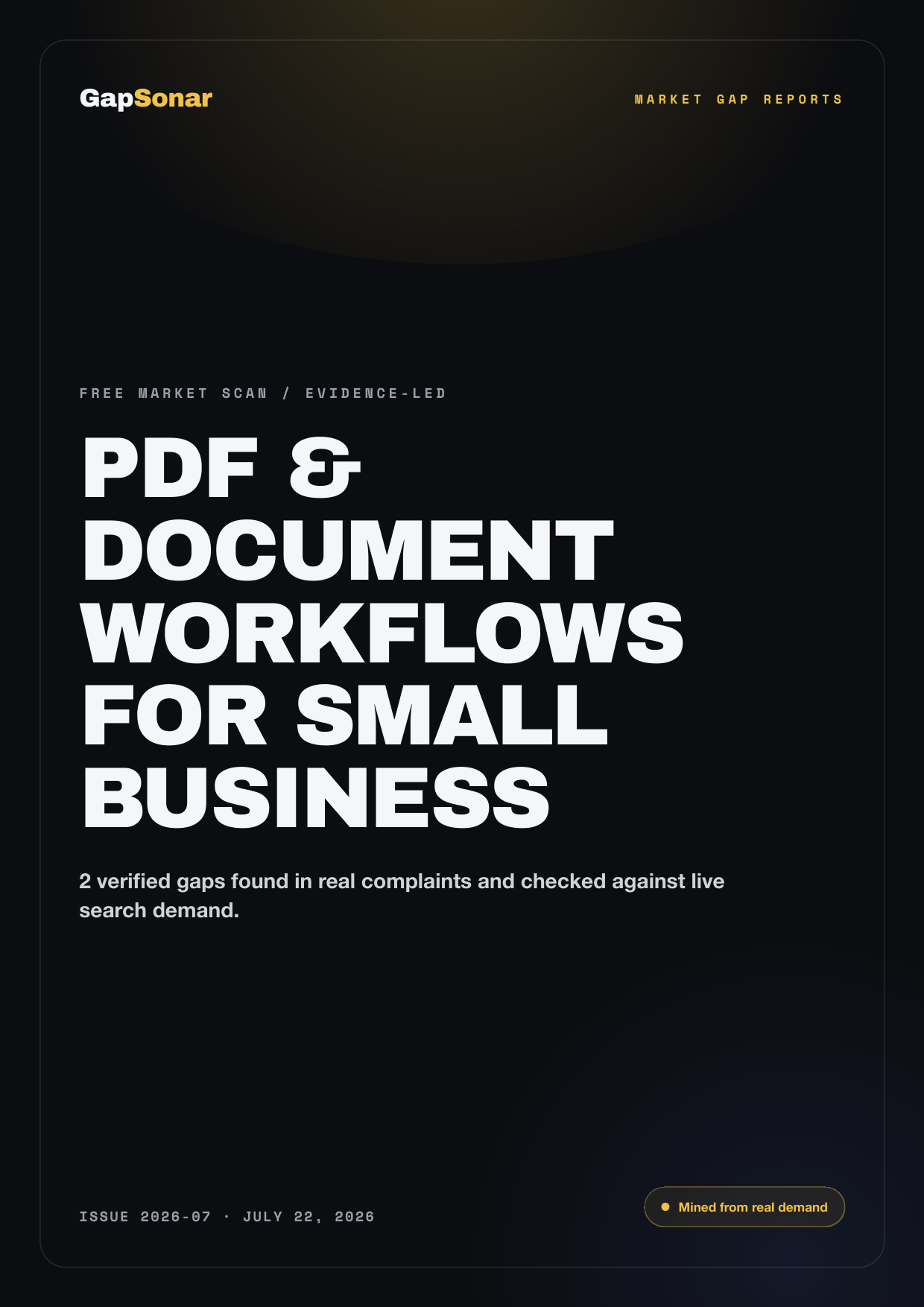
Each issue takes one market, reads hundreds of its complaints, and profiles the gaps that survived verification.


How it works
Three steps from urge to evidence
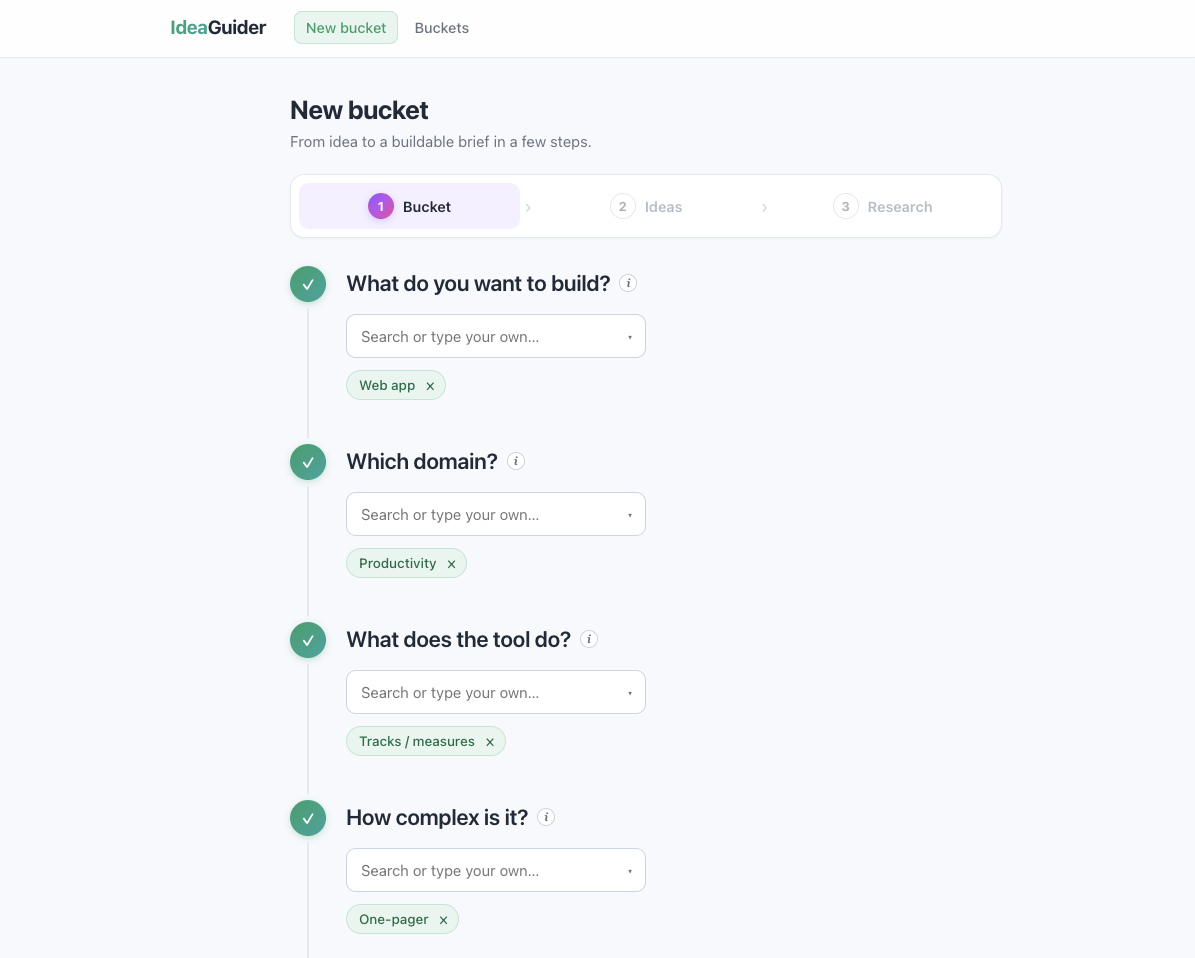
Every idea-hunt lives in a bucket. A progress bar follows it from idea → ideas → research, so you always know where each one stands.
Everything in the box
Opinionated. Fast. No fluff.
Guided idea wizard
Go from a vague urge to a structured brief without ever staring at a blank page.
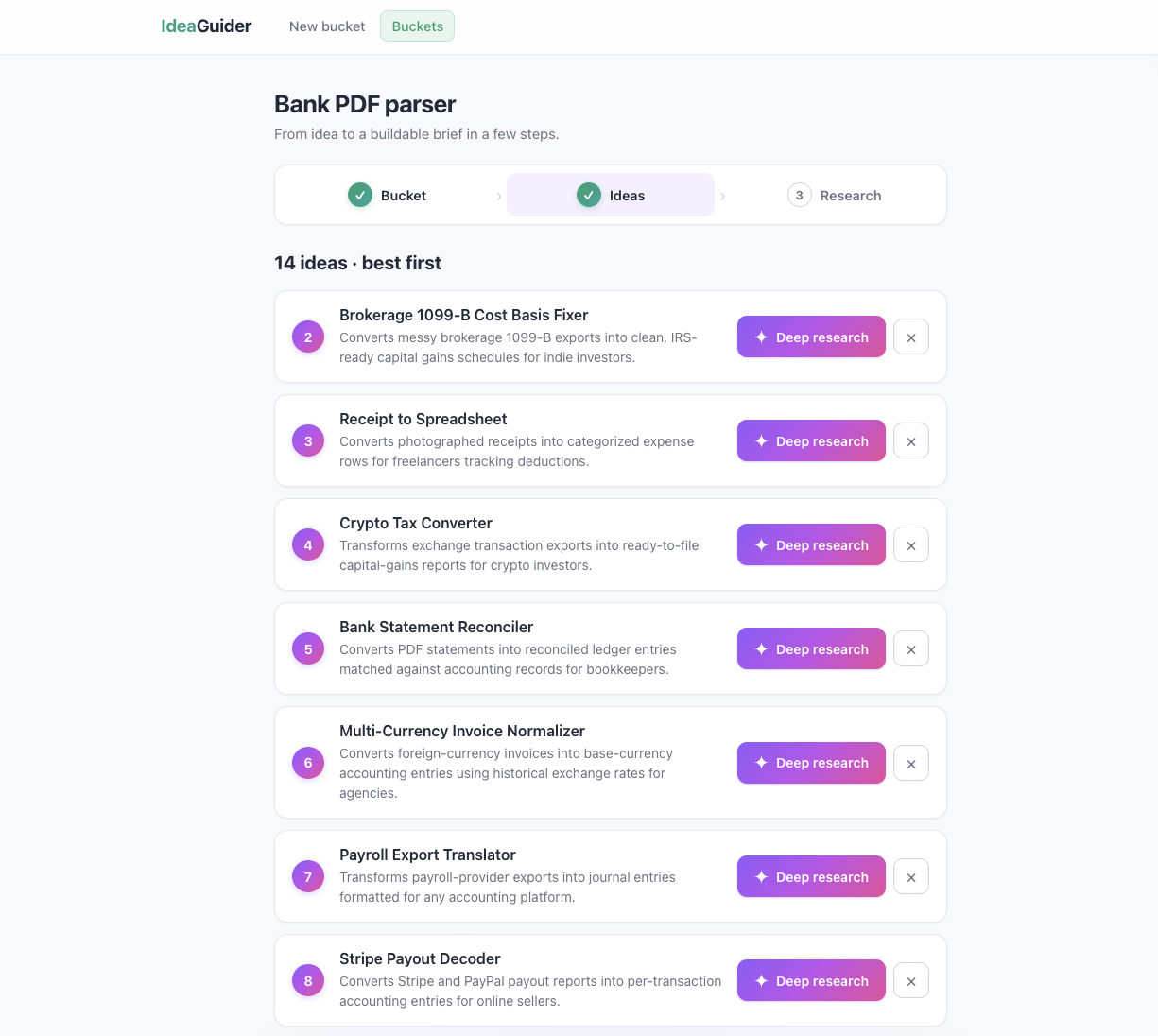
AI idea ranking
AIConcrete, buildable ideas — ranked best to worst — in seconds.
One-tap AI naming
AIName your saved buckets with a single click. Or write your own.
Refine freely
Delete the weak ideas, generate five more, or regenerate the whole set.
Deep research
AIValidate demand, competition and willingness-to-pay before you build.
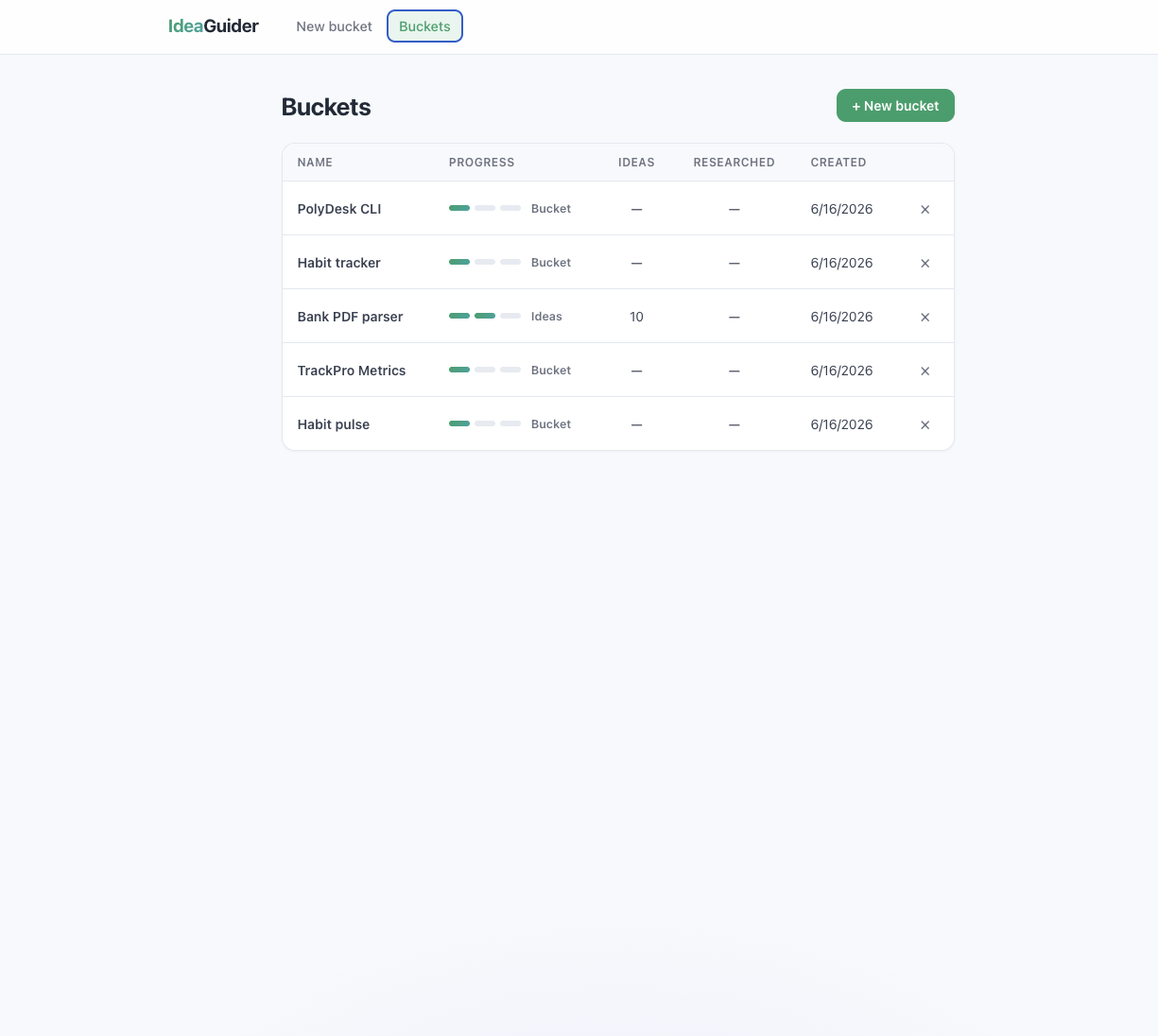
Buckets dashboard
Every idea-hunt in one table with live progress — idea → ideas → research.
Built for people who ship
“I had three half-baked ideas and zero conviction. GapSonar ranked them, killed two, and told me which one people would actually pay for.”
“It’s the missing step before Bolt. Find the what here, build the how there. Obvious in hindsight.”
“Blank-page paralysis was costing me every weekend. Now I start Saturday with a validated brief instead of a blinking cursor.”